


You've probably done it already. Raised your eyebrows in the mirror, or furrowed them on purpose, just to see how deep the lines go when your face isn't relaxed. Then you let your face go still and noticed the lines are still faintly there. That moment, more than any ad or influencer video, is usually what brings people to start researching Botox seriously.
Before you book anything, it helps to understand what's actually happening in your skin, why certain lines respond so well to this particular treatment, and what the process really looks like for Fort Worth clients considering it for the first time.
Why Do Forehead Lines and Frown Lines Form in the First Place?
Every time you raise your eyebrows, squint, or furrow your brow, the underlying muscles contract and fold the skin above them. In your twenties, that skin bounces right back. Over time, collagen production slows, skin becomes less elastic, and those repeated folds start etching themselves in permanently, even when your face is at rest. Genetics, sun exposure, smoking, and even sleep position can accelerate the process.
Is It Normal to See Lines Even When My Face Is Relaxed?
Yes, and this is actually a useful marker providers use to judge treatment timing. Lines that only appear during movement are considered dynamic wrinkles. Lines that remain visible at rest are considered static wrinkles, and they typically require more sessions, or a combination of treatments, to soften. Catching lines while they're still dynamic is one reason many people start neurotoxin treatment earlier than they expected to.
What Exactly Does Botox Do to Treat These Lines?
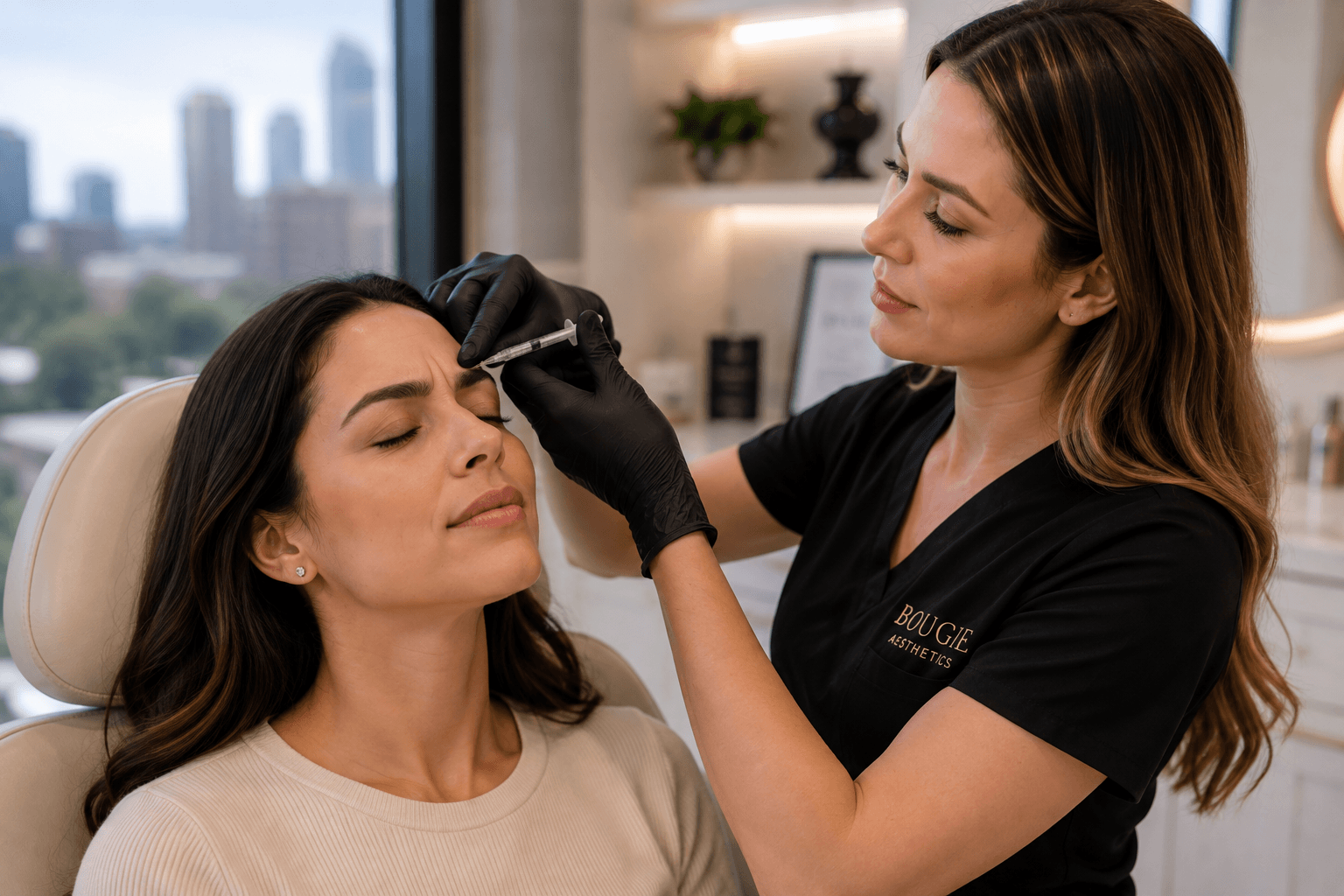
Botox is a neuromodulator, meaning it temporarily blocks the nerve signals that tell specific facial muscles to contract. Injected precisely into targeted muscles, typically the frontalis for forehead lines and the corrugator and procerus muscles for frown lines between the brows, it relaxes just enough movement to smooth the skin above without freezing the entire face.
At Bougie Aesthetics, Botox is offered alongside Xeomin and Dysport, giving clients options depending on how their skin responds and how quickly they want to see results.
How Long Does It Take to See Results?
Most clients notice initial softening within three to five days, with full results settling in around the two week mark. Results typically last three to four months before the treated muscles gradually regain movement, which is why most clients settle into a maintenance schedule a few times a year.
Beyond Forehead Lines: Other Concerns Botox Commonly Addresses
Can Botox Help With a Gummy Smile or Downturned Mouth?
Yes. Small, precise doses of Botox can relax the muscles that pull the upper lip too high when smiling, or the ones that tug the corners of the mouth downward, creating a more balanced, natural looking smile without affecting speech or eating.
What About Crow's Feet and Bunny Lines?
Crow's feet, the fanning lines at the outer corners of the eyes, and bunny lines, the creases across the bridge of the nose, both respond well to targeted Botox placement, especially when caught before they deepen into static lines.
Is Botox Only for Wrinkles, or Does It Treat Anything Else?
This is where a lot of people are surprised to learn Botox has legitimate therapeutic applications beyond cosmetic use. Conditions like chronic migraines, TMJ related jaw tension, and excessive facial slimming concerns can also be addressed with therapeutic dosing protocols, which is a separate but related service some clinics offer alongside cosmetic treatment.
Who Is a Good Candidate for Botox?
Most healthy adults noticing early dynamic lines, established static lines, or muscle related concerns like a gummy smile are reasonable candidates. Pregnancy, breastfeeding, certain neuromuscular conditions, and specific medications can rule someone out, which is exactly why a real consultation matters before any injection happens.
Is There an Ideal Age to Start Botox?
There isn't a single correct answer here, and providers genuinely disagree on this. Some recommend starting preventatively in the late twenties or early thirties, once dynamic lines begin to appear, arguing it slows the progression toward deeper static wrinkles. Others prefer waiting until lines are more established. Either approach can be reasonable depending on your skin, goals, and how your face naturally ages.
What Should I Expect During My First Appointment?
Expect a short consultation first, where your provider examines your facial movement patterns and discusses your goals. The injections themselves typically take ten to fifteen minutes, with minimal discomfort often compared to a quick pinch. There's essentially no downtime, though most providers recommend avoiding strenuous exercise for the rest of the day to keep the product from migrating before it fully sets.
How Long Should I Wait to Work Out After Botox?
Most providers recommend waiting at least 24 hours before intense exercise. Sweating and increased blood flow too soon after injection can theoretically cause the product to spread beyond the targeted muscle, though the actual risk is fairly low with modern technique. It's a small precaution for a treatment you'll want to last its full duration.
Botox, Dysport, or Xeomin: Which One Fits Your Face?
All three are neuromodulators that work similarly, but they differ slightly in onset speed, diffusion, and how the protein is formulated. Some clients respond better to one product than another, which is part of why an experienced injector will sometimes recommend switching products if results feel shorter than expected. This flexibility is one advantage of choosing a clinic that offers multiple neurotoxin options rather than just one brand.
Why Fort Worth Clients Keep Coming Back for Botox
Texas summers are long, bright, and hard on skin. Between sun exposure and the natural expressiveness that comes with an active social life, forehead lines and frown lines tend to show up a little earlier here than in cooler, less sunny regions. Regular Botox maintenance has become less of a luxury and more of a practical part of skincare routines for a lot of Fort Worth residents who want to stay ahead of static wrinkles rather than treat them after the fact.
Smoothing Things Over, Literally
Lines on your forehead or between your brows aren't a flaw to fix so much as a sign that your face has been busy expressing a life well lived. Botox doesn't erase that. It just softens the parts that started sticking around longer than you'd like. Whether you're catching early dynamic lines or dealing with wrinkles that have been there a while, a real conversation with an experienced injector is the best next step toward figuring out what will actually work for your face.
This article is kept current by our team, most recently updated in August 2026, to reflect the latest treatment insights.
Frequently Asked Questions
How much does Botox typically cost? Botox is usually priced per unit, and the total cost depends on how many units are needed to treat your specific concern, which varies by area and individual muscle strength. A consultation is the best way to get an accurate estimate.
Does Botox hurt? Most clients describe it as a quick pinch or slight sting, lasting only a second or two per injection point. Numbing cream is sometimes used for more sensitive clients.
Will Botox make my face look frozen? Not when administered by an experienced injector using appropriate dosing. The goal of modern Botox treatment is natural movement with softened lines, not a completely immobile face.
Can I combine Botox with other treatments like dermal fillers? Yes, many clients combine Botox with dermal fillers or skin resurfacing treatments to address both dynamic wrinkles and volume loss in the same visit, often for a more complete result.
How soon can I see results after my first Botox treatment? Most people notice initial changes within three to five days, with full results visible by the two week mark.