



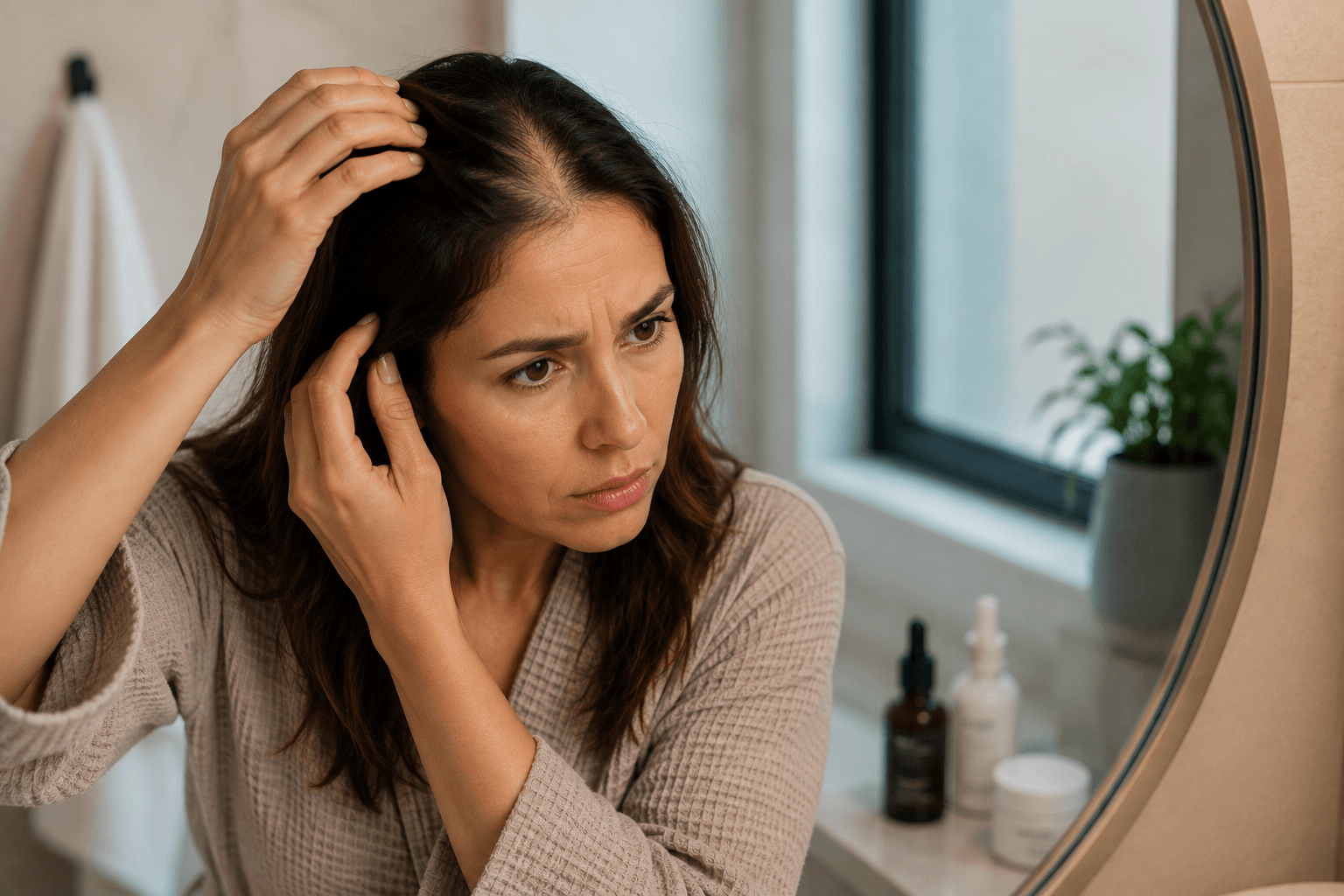
Maybe it started with more hair in the shower drain than usual. Maybe it was a photo that showed more scalp through your part than you remembered, or a hairline that seemed to have quietly shifted back over the last few years. Hair thinning tends to creep in gradually, which makes it easy to dismiss at first and frustrating once it becomes hard to ignore. It is also one of the most common concerns we help patients work through in Fort Worth, Texas. This guide covers why hair thinning happens, when it is worth addressing, and how PRP and PRF hair restoration works as a non surgical option to support regrowth. Updated for August 2026.
What Causes Hair Thinning and Hair Loss?
Hair loss is rarely caused by just one factor. Understanding what is actually driving it helps determine which treatment approach makes the most sense.
Genetic Pattern Hair Loss
Androgenetic alopecia, commonly known as male or female pattern hair loss, is the most common cause of thinning hair and is driven largely by genetics and hormone sensitivity in the hair follicles. It typically shows up as a receding hairline or thinning crown in men, and diffuse thinning across the top of the scalp in women.
Hormonal Changes and Stress
Hormonal shifts from pregnancy, menopause, thyroid conditions, or significant life stress can trigger a temporary form of hair shedding called telogen effluvium. This type of hair loss often resolves on its own once the underlying trigger is addressed, though it can take months to fully recover.
Scalp Health and Nutrient Deficiencies
A healthy scalp environment is essential for strong hair growth. Poor circulation, inflammation, or nutrient deficiencies like low iron or vitamin D can weaken hair follicles over time, contributing to thinning even in people without a strong genetic predisposition.
What Are the Early Warning Signs of Thinning Hair?
Catching hair loss early generally gives treatment the best chance of preserving existing hair. Watch for:
- A widening part line or more visible scalp
- A hairline that looks like it has moved back, even slightly
- Hair that feels thinner or less dense to the touch
- Increased shedding noticed in the shower or on your pillow
- Slower regrowth after haircuts
Is Hair Loss Reversible?
It depends on the cause and how early it is addressed. Hair follicles that have completely stopped functioning are difficult to revive, but follicles that are simply weakened or in a dormant phase can often be stimulated back into active growth with the right treatment. This is exactly why non surgical options that support the health and activity of existing follicles have become such a popular first step before considering more invasive procedures.
What Is PRP and PRF Hair Restoration and How Does It Work?
PRP and PRF hair restoration uses your own blood to create a concentrated solution of growth factors, which is then injected into the scalp to stimulate hair follicles.
Platelet Rich Plasma Explained
A small blood sample is drawn and spun in a centrifuge to separate and concentrate the platelets, which contain growth factors known to support tissue repair and cell growth. This platelet rich plasma is then injected directly into areas of thinning, where it works to improve blood supply to the follicles and extend the hair's active growth phase.
How PRF Differs From PRP
PRF, or platelet rich fibrin, is a newer evolution of the same concept. It uses a gentler spin process that preserves more white blood cells and growth factors in a fibrin matrix, which can release those growth factors more gradually over time. Many providers now use PRF or a combination of both for a more sustained effect on the scalp.
Who Is a Good Candidate for PRP/PRF Hair Restoration in Fort Worth?
This treatment tends to work best for people who still have some active hair follicles in the treatment area, including those experiencing:
- Early to moderate pattern hair loss
- Diffuse thinning across the scalp
- A receding hairline they would like to slow or improve
- Hair thinning following a stressful life event or hormonal shift
- A preference for a non surgical approach before considering other options
It is generally less effective on areas of the scalp that have been completely bald for an extended period, since those follicles are often no longer active.
What Does the Treatment and Recovery Process Look Like?
Because PRP and PRF use your own blood, there is minimal risk of allergic reaction, and most people return to normal activities the same day with only mild scalp tenderness. A treatment plan typically involves a series of sessions spaced about a month apart, followed by periodic maintenance treatments to sustain results. Most patients begin noticing reduced shedding within a couple of months, with visible improvements in density typically appearing around three to six months as the hair growth cycle progresses.
How Does PRP/PRF Compare to Other Hair Loss Treatments?
PRP and PRF are often used alongside topical treatments like minoxidil or prescription options, rather than as a complete replacement for them, since combining approaches can improve overall results. Compared to hair transplant surgery, PRP and PRF involve no incisions, no grafting, and far less downtime, making them a common first step for people with early to moderate thinning who are not yet ready for a surgical procedure. For some patients, PRP and PRF are also used to support healing and improve results after a transplant.
Why Choose Bougie Aesthetics for Hair Restoration in Fort Worth, Texas?
Our team evaluates your pattern of hair loss, scalp health, and treatment history before building a personalized PRP and PRF plan, since a generic approach rarely delivers the best results. If you are curious how hair restoration fits alongside our other regenerative treatments, take a look at our full regenerative aesthetics offerings or visit our homepage to learn more about what we offer across Fort Worth.
Hair Today, Here to Stay
Thinning hair can feel like it is happening to you rather than something you have any control over, but in many cases, your existing follicles just need the right support to get back to active growth. PRP and PRF hair restoration works with your body's own healing resources to give those follicles that support, without surgery or a long recovery. For many of our Fort Worth patients, that has meant watching thinning finally slow down, and in many cases, reverse.
Frequently Asked Questions
How many PRP or PRF sessions will I need for hair restoration? Most treatment plans start with a series of three to four sessions spaced about four to six weeks apart, followed by maintenance treatments every several months to sustain results.
Does PRP hair restoration hurt? A numbing agent is typically applied to the scalp before treatment, and most patients describe the sensation as mild discomfort rather than significant pain.
Is PRP hair restoration only for men? No, PRP and PRF are effective for both men and women experiencing pattern hair loss or diffuse thinning, and treatment plans are tailored to each person's specific pattern.
When will I start seeing results from PRP hair restoration? Reduced shedding is often noticed within the first couple of months, while visible improvements in hair density typically become apparent around three to six months into treatment.
Can PRP regrow hair in completely bald areas? PRP and PRF work best on follicles that are still active but weakened. Areas that have been completely bald for a long time often have little to no active follicles left to stimulate, so results are more limited in those spots.