



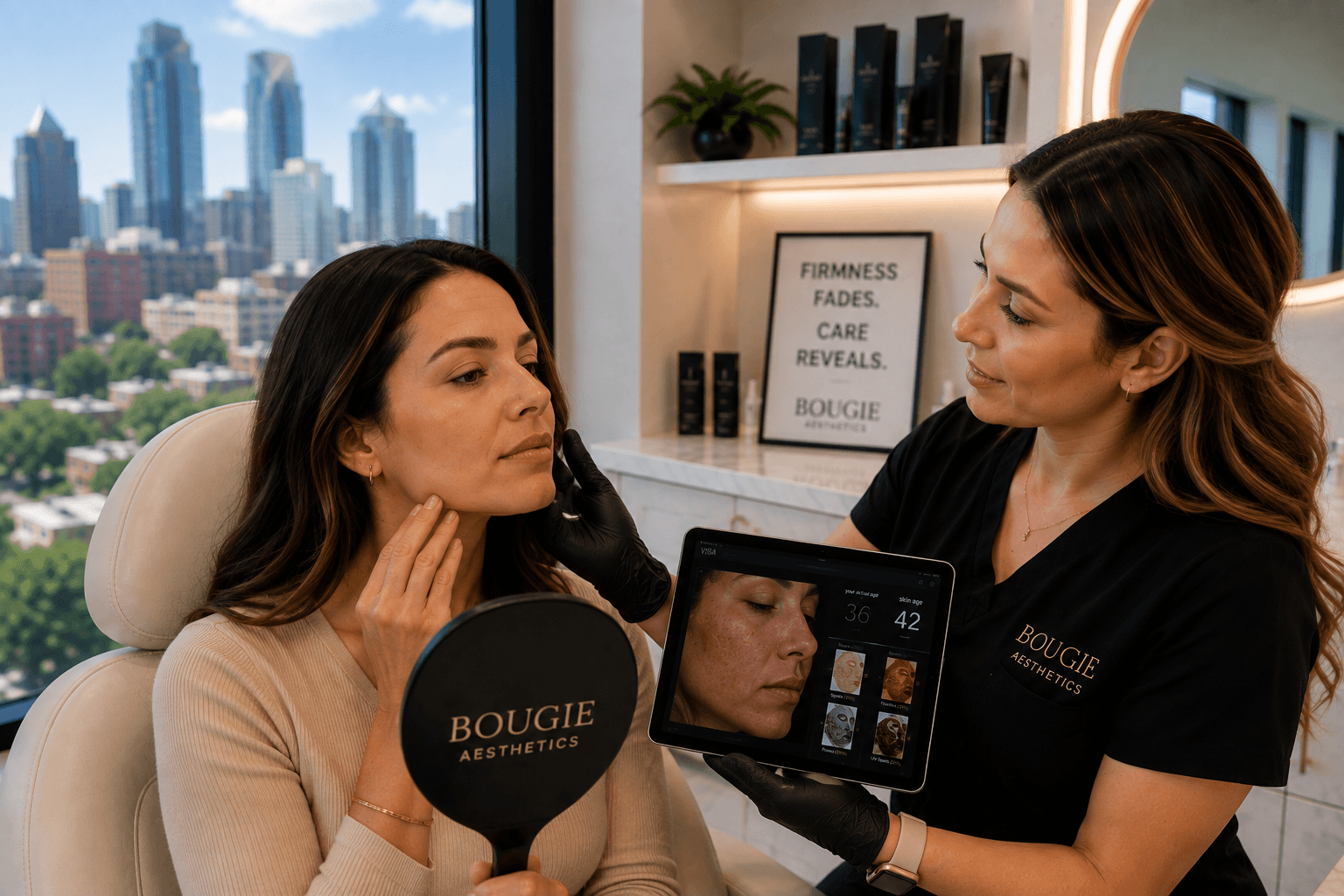
It usually catches people off guard. One day you glance in the mirror and notice your jawline does not look quite as sharp, or the skin along your cheeks and neck seems a little looser than it used to be, even though nothing dramatic happened to cause it. If you have found yourself wondering why this is happening earlier than you expected, you are asking a question we hear often from patients across Fort Worth, Texas. The good news is that early skin laxity has a clear explanation, and there is a well established, non surgical way to address it. This article has been updated for August 2026 with current insights on why skin loses firmness and how RF microneedling helps rebuild it.
What Causes Skin to Lose Firmness Over Time?
Skin laxity is not just about getting older. It is the result of specific biological changes, some of which start showing up much earlier than people expect.
Collagen and Elastin Breakdown
Collagen gives skin its structure, while elastin allows it to snap back into place after stretching or movement. Collagen production begins declining by roughly one percent per year starting in your twenties, and that decline speeds up around perimenopause and menopause for many women. As these fibers weaken and thin, skin loses its scaffolding and starts to sag rather than bounce back.
Sun Exposure and Genetics
Texas sunshine is part of the lifestyle here, but UV exposure is also one of the biggest accelerators of collagen breakdown. Genetics play a role too. Some people naturally have thinner skin or less robust collagen production, which means visible laxity can show up in their thirties rather than their fifties.
Weight Fluctuations and Volume Shifts
Significant weight loss or gain can stretch skin beyond what its elastin fibers can fully recover from. This is especially common along the jawline, neck, and midface, where skin that once fit snugly over more volume is left looser after that volume changes.
What Are the Early Signs of Skin Laxity?
Sagging does not always look dramatic in its early stages. Watch for signs like:
- A jawline that looks softer or less defined in photos
- Skin along the cheeks that seems to fold rather than sit smoothly
- Early jowling near the mouth and chin
- Neck skin that looks looser than your face
- Pores that appear stretched or elongated rather than round
Catching these early signs sooner rather than later generally means less intervention is needed to see meaningful improvement.
Is Sagging Skin Reversible Without Surgery?
For mild to moderate laxity, the answer is often yes. Surgery like a facelift addresses excess skin directly, but many people are not ready for that level of intervention or simply do not need it yet. Non surgical treatments that stimulate the skin's own collagen production can meaningfully improve firmness without downtime measured in weeks. The key is choosing a treatment that reaches deep enough into the skin to actually trigger that rebuilding process, rather than one that only affects the surface.
What Is RF Microneedling and How Does It Tighten Skin?
RF microneedling combines two proven technologies into a single treatment. Fine needles create controlled micro channels in the skin, while radiofrequency energy is delivered simultaneously through those channels to heat the deeper dermal layer.
Combining Microneedling With Radiofrequency Energy
That combination matters because heat and mechanical injury together trigger a stronger collagen and elastin response than either approach on its own. The radiofrequency energy specifically targets the deeper skin layers responsible for firmness, which is why RF microneedling has become a go to option for people focused on tightening rather than just texture.
How It Differs From Traditional Microneedling
Traditional microneedling is excellent for scarring, texture, and tone. RF microneedling takes things a step further for people whose primary concern is laxity, since the added heat energy encourages more significant tightening in the treated area. Many patients choose RF microneedling specifically because it can address early jowling, neck laxity, and a softened jawline that traditional microneedling alone may not fully resolve.
Who Is a Good Candidate for RF Microneedling in Fort Worth?
RF microneedling tends to work best for people who are noticing:
- Early to moderate skin laxity on the face, jawline, or neck
- A desire to avoid surgical intervention
- Textural concerns combined with looseness
- Interest in gradual, natural looking improvement rather than a dramatic change
A consultation with our team can confirm whether your skin will respond well to this treatment or whether a combination approach makes more sense for your goals.
What Does Recovery and the Results Timeline Look Like?
Downtime after RF microneedling is generally short, with most people experiencing redness and mild swelling for a few days. Because the treatment works by stimulating your body's own collagen remodeling process, results build gradually over the following two to three months as new collagen forms. Most treatment plans involve a series of three sessions spaced four to six weeks apart, with results that can continue improving for several months after the final treatment.
How Does RF Microneedling Compare to Other Skin Tightening Options?
RF microneedling sits alongside a few other treatments we offer for firmness and volume concerns. Laser skin resurfacing uses light energy and tends to be a better fit for sun damage and surface texture rather than deep tightening. For people dealing with volume loss alongside laxity, injectable options like Sculptra and Radiesse work by stimulating collagen from within while also restoring lost volume in the cheeks and jawline. Many patients combine RF microneedling with one of these treatments for a more complete result, and our team can help map out the right order and timing during your consultation.
Why Choose Bougie Aesthetics for RF Microneedling in Fort Worth, Texas?
We take a personalized approach to every RF microneedling plan, factoring in your skin's thickness, your specific areas of concern, and how your skin has responded to any past treatments. If tightening is only part of what you are after, we can also walk you through our full menu of aesthetician services or explore our broader service offerings from our homepage.
Tightening Up the Conversation
Losing firmness earlier than expected can feel discouraging, but it is rarely a sign that your skin is beyond help. In most cases, it simply means your collagen needs a reason to get back to work, and RF microneedling gives it exactly that. With a personalized plan and a bit of patience through the results timeline, many of our Fort Worth patients see their jawline, cheeks, and neck look noticeably firmer without ever stepping into an operating room.
Frequently Asked Questions
At what age should I consider RF microneedling? There is no single right age. Some people start seeing early laxity in their late twenties or thirties, while others wait until their forties or fifties. What matters more than age is whether you are noticing early signs of sagging that you would like to address.
Is RF microneedling painful? Most patients describe a warm sensation and mild pressure rather than significant pain, and a numbing cream is applied beforehand to keep the treatment comfortable.
How is RF microneedling different from a facelift? RF microneedling stimulates your skin to rebuild its own collagen gradually, with no surgery and minimal downtime. A facelift physically removes excess skin and repositions tissue, which delivers more dramatic results but requires a surgical recovery.
Can RF microneedling help with a double chin or neck laxity? Yes, RF microneedling is commonly used on the neck and under chin area to improve firmness, though significant fat concerns in that area are typically addressed separately with a treatment like Kybella.
How soon will I see results from RF microneedling? Some initial tightening can be visible within a few weeks, but full results typically develop over two to three months as new collagen builds, with continued improvement after a full series of sessions.