


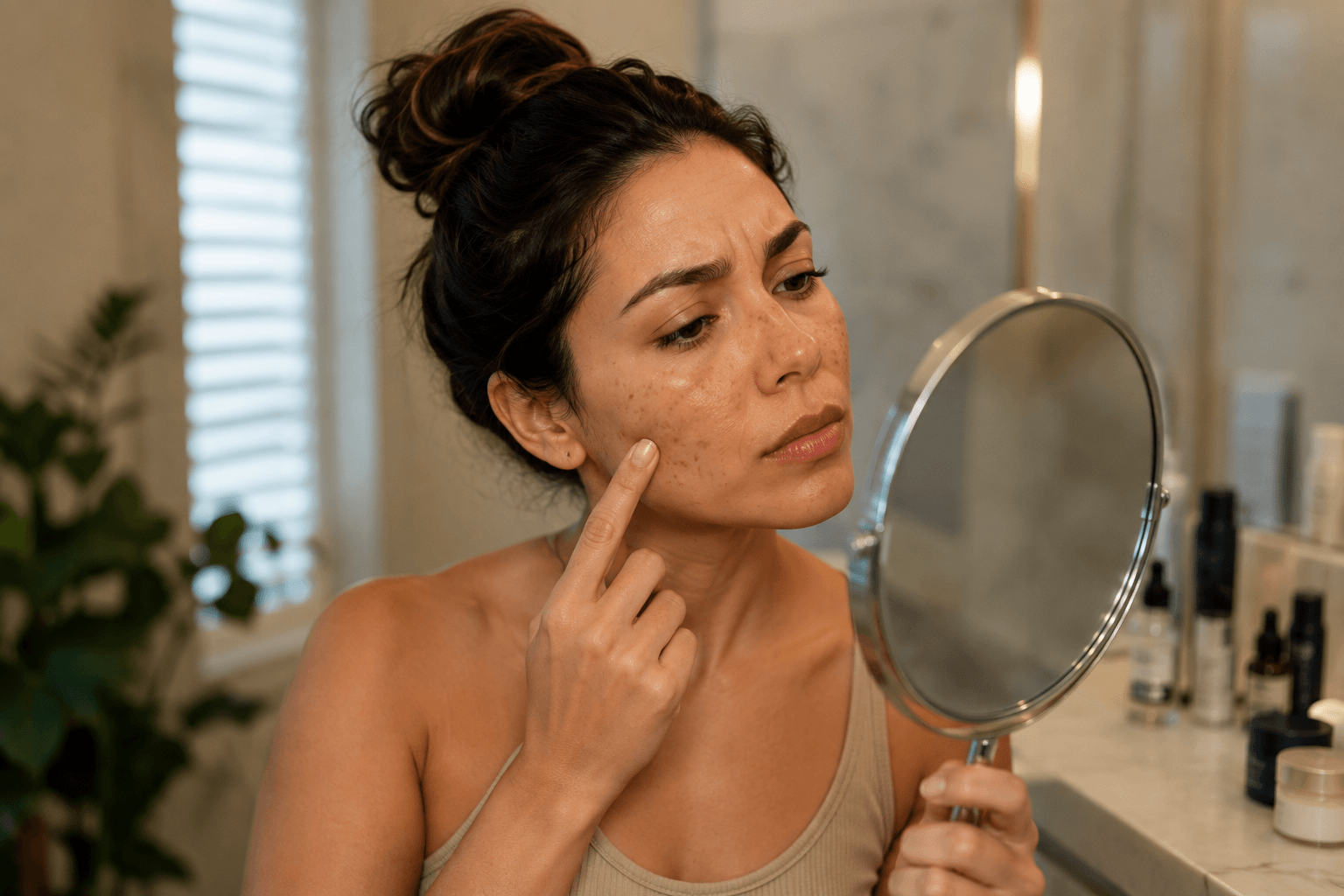
Brightening serums, vitamin C, exfoliating masks. If you have cycled through most of them and your sun spots or uneven patches are still staring back at you in the mirror, it is not because you picked the wrong product. Certain types of discoloration simply live too deep in the skin for topical treatments to fully clear. This is one of the most common concerns we hear from people across Fort Worth, Texas, where sun exposure is a year round reality rather than a summer only issue. This guide covers what actually causes stubborn discoloration and uneven tone, and how laser skin resurfacing helps address it at the source. Updated for August 2026 with current treatment information.
What Causes Sun Spots, Dark Patches, and Uneven Tone?
Discoloration is rarely random. It typically traces back to one of a few specific causes, each of which behaves a little differently on the skin.
UV Damage and Photoaging in North Texas
Texas gets significantly more sun exposure per year than most of the country, and cumulative UV exposure is the leading cause of sun spots, also known as solar lentigines. Even consistent sunscreen use cannot fully undo years of prior exposure, since the pigment changes and collagen breakdown from UV damage happen at a cellular level over time.
Hormonal Changes and Melasma
Melasma is a common form of patchy discoloration triggered by hormonal shifts, often related to pregnancy, birth control, or thyroid changes. It tends to appear on the cheeks, forehead, and upper lip, and it can be more resistant to standard brightening products since it is driven by hormonal signals rather than surface pigment alone.
Post Inflammatory Discoloration From Acne or Injury
Any time skin experiences significant inflammation, whether from a breakout, a cut, or even a bug bite, it can leave behind a dark or discolored mark called post inflammatory hyperpigmentation. This type of discoloration often fades slowly on its own, but it can take months to years without help, especially in areas that get repeated sun exposure.
What Are the Signs Your Skin Needs More Than a Brightening Serum?
If you have noticed any of the following, it is a strong sign that topical products alone will not resolve the concern:
- Spots that have stayed the same size or color for six months or longer
- Discoloration that seems to darken again shortly after any improvement
- Uneven patches that are more textured than the surrounding skin
- Tone that looks blotchy rather than one consistent shade
- Visible broken capillaries or redness alongside the discoloration
Can Sun Damage Be Reversed?
To a meaningful degree, yes. While it is not possible to completely erase decades of cumulative sun exposure, targeted treatments can significantly reduce the appearance of spots, even out tone, and improve the overall texture changes that come with photoaging. The key is choosing a treatment that reaches the layer of skin where that pigment and damage actually live, rather than one that simply exfoliates the surface.
What Is Laser Skin Resurfacing and How Does It Work?
Laser skin resurfacing uses focused light energy to target damaged skin cells and pigment while simultaneously encouraging the skin to produce fresh collagen as it heals.
Targeting Pigment and Stimulating Collagen
The laser energy is absorbed by excess pigment in the skin, breaking it down so the body can clear it away naturally. At the same time, the controlled heat prompts a collagen rebuilding response, which is why laser resurfacing tends to improve both discoloration and overall texture at once, rather than addressing just one concern.
Ablative vs Non-Ablative Approaches
Ablative lasers remove the outermost layer of skin to reveal fresher skin underneath, typically delivering more dramatic results with a longer recovery. Non-ablative lasers work beneath the surface without removing the top layer, offering a gentler option with less downtime, though often requiring a series of sessions to reach similar results. Your provider will help determine which approach fits your skin type, tone, and goals.
Who Is a Good Candidate for Laser Skin Resurfacing in Fort Worth?
Laser skin resurfacing tends to be a good fit if you are dealing with:
- Sun spots or age spots
- Uneven tone or blotchy discoloration
- Fine lines and mild textural roughness
- Some forms of acne scarring
- A general dullness that has not responded to skincare alone
Because certain lasers interact differently with melanin, a consultation helps confirm the safest and most effective settings for your specific skin tone.
What Does Recovery Look Like?
Recovery depends heavily on which type of laser treatment you receive. Non-ablative treatments typically involve redness for a day or two, similar to a mild sunburn. More intensive ablative treatments can involve several days of peeling and redness as the skin renews itself. In both cases, diligent sun protection afterward is essential, since freshly treated skin is more sensitive to UV exposure while it heals.
How Does Laser Skin Resurfacing Compare to Microneedling or Chemical Peels?
Laser resurfacing, microneedling, and chemical peels are often mentioned in the same breath because they all improve skin quality, but they work differently. Microneedling relies on mechanical micro injury to stimulate collagen and tends to shine for scarring and texture without targeting pigment directly. A chemical peel uses acids to exfoliate the surface and can help with mild discoloration and dullness with very little downtime. Laser resurfacing tends to be the most effective single option for pigment concerns specifically, since it directly targets the discoloration itself rather than working around it. Many patients combine treatments over time for a more complete result, which our team can help plan out.
Why Choose Bougie Aesthetics for Laser Skin Resurfacing in Fort Worth, Texas?
Our team evaluates your skin type, tone, and specific discoloration pattern before recommending a treatment plan, since not every laser setting is appropriate for every skin type. We also frequently pair laser resurfacing with our medical grade skincare recommendations to help maintain results between sessions. You can browse our complete list of aesthetician services or return to our homepage to see everything we offer in Fort Worth.
Clearing Up the Confusion (and the Skin)
Sun spots and uneven tone are stubborn for a reason. They form deeper than a serum can reach, which is exactly why they have resisted every product you have tried so far. Laser skin resurfacing works at that deeper level, targeting pigment directly while encouraging your skin to rebuild itself along the way. With the right treatment plan and a little patience through recovery, that blotchy, uneven tone you have been trying to fix for years can finally start looking like a thing of the past.
Frequently Asked Questions
Is laser skin resurfacing safe for all skin tones? Not every laser is appropriate for every skin tone, since some wavelengths carry a higher risk of discoloration in deeper skin tones. A consultation helps determine the safest, most effective option for your specific skin.
How many laser skin resurfacing sessions will I need? This depends on the intensity of the treatment and your specific concerns. Non-ablative treatments often require a series of three to five sessions, while more intensive ablative treatments may deliver significant results in just one or two sessions.
Will laser skin resurfacing get rid of melasma completely? Melasma can be improved with laser treatment, but because it is hormonally driven, it can also return, especially with sun exposure or hormonal changes. A maintenance plan is often recommended for lasting results.
How long should I avoid sun exposure after treatment? Diligent sun protection is recommended for at least several weeks after treatment, and daily sunscreen should become a permanent habit to protect your results long term.
Can laser skin resurfacing help acne scars too? Yes, certain laser settings are effective for improving the appearance of acne scarring, particularly when combined with other collagen stimulating treatments like microneedling.