



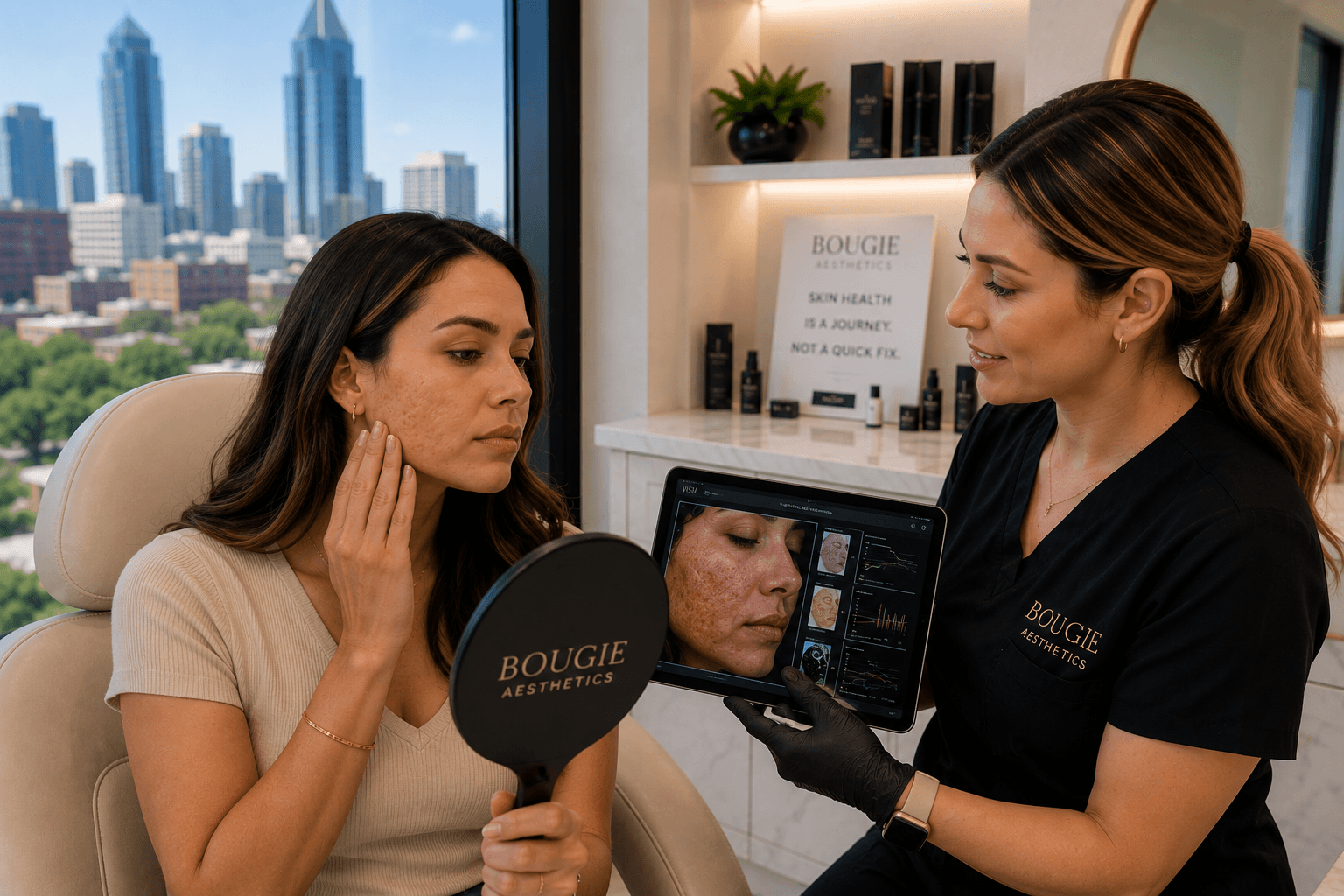
You have tried the serums. You have tried the exfoliating scrubs, the vitamin C, the retinol that promised to change your life. And yet, when you look in the mirror under good lighting, the same story shows up: rough patches, faint scarring, pores that seem to get more noticeable every year, and a tone that never quite looks even. If this sounds familiar, you are far from alone. It is one of the most common frustrations we hear from people walking through our doors in Fort Worth, Texas, and it usually has less to do with which product you are using and more to do with what is happening underneath the surface of your skin.
This guide breaks down what actually causes uneven texture and tone, when it is a sign of something skincare alone cannot fix, and how microneedling has become one of the most trusted ways to smooth things out for good. This information has been updated for August 2026 to reflect current treatment standards and what our Fort Worth patients are asking about most.
What Causes Uneven Skin Texture and Tone?
Before jumping to a solution, it helps to understand why your skin behaves the way it does. Texture issues rarely come from a single cause. They usually build up over years from a mix of environmental exposure, genetics, and the natural slowdown of your skin's repair process.
Sun Exposure and Environmental Damage in North Texas
Living in North Texas means dealing with more sun exposure than most parts of the country get in a year. UV rays break down collagen and elastin fibers over time, which leaves the skin looking rougher and less even, even in people who wear sunscreen regularly. This kind of cumulative damage often shows up as sun spots, a leathery texture, or patches of discoloration that seem to appear out of nowhere in your thirties or forties.
Acne Scarring and Enlarged Pores
Many people carry the marks of teenage or adult acne long after the breakouts have cleared. Scarring can leave shallow depressions in the skin, while pores that were once stretched by inflammation often stay enlarged. These changes are structural, meaning they live below the surface layer of skin that creams and serums can reach.
Natural Collagen Decline With Age
Collagen production starts dropping around your mid-twenties and continues declining every year after that. As collagen and elastin thin out, skin loses some of its bounce and becomes more prone to looking crepey or uneven, especially around the cheeks and jawline.
How Do You Know If It Is More Than Just Dry Skin?
Dryness usually responds to moisturizer within days. Textural concerns do not. If you have noticed any of the following, it is likely a deeper skin concern rather than simple dehydration:
- Small bumps or roughness that you can feel more than see
- Visible pitting or shallow scarring from past breakouts
- Pores that look more prominent than they used to
- Dullness that does not improve with cleansing or exfoliating
- Fine lines that seem to be settling in permanently
These are signs that your skin's underlying structure needs support that topical products cannot provide on their own.
Can Skincare Products Alone Fix Textured, Uneven Skin?
Good skincare matters, and a solid routine can absolutely improve the surface appearance of your skin. But most over the counter products are formulated to stay in the outermost layer, called the epidermis, because anything that penetrates deeper is generally regulated as a medical treatment. That is why serums can brighten and hydrate but rarely resolve scarring, deep texture, or the collagen loss that drives sagging and unevenness. To make a real structural change, skin needs a treatment that reaches the dermis, the deeper layer where collagen is actually produced.
What Is Microneedling and How Does It Smooth the Skin?
Microneedling is a collagen induction treatment that uses a device with fine, sterile needles to create controlled micro injuries in the skin. This might sound intense, but the process is quick, well tolerated, and backed by a large body of clinical research showing it improves texture, scarring, and tone over a series of sessions.
How Collagen Induction Therapy Works
When the skin senses these microscopic injuries, it responds by triggering its natural wound healing process. That means an increase in collagen and elastin production in the treated area. Over the following weeks, this new collagen helps fill in scarring, tighten loose texture, and even out tone from the inside, not just the surface.
What Makes SkinPen Different From At-Home Rollers
There is a meaningful difference between the derma rollers sold online and a professional treatment using an FDA cleared device like SkinPen. Professional microneedling allows for precise, consistent needle depth, sterile single use tips, and adjustable settings based on your specific skin concerns. At-home rollers tend to cause uneven pressure and carry a higher risk of irritation or infection, with far less consistent results.
Who Is a Good Candidate for Microneedling in Fort Worth?
Microneedling works well for most skin types and tones, which is part of why it has become such a popular option. You may be a strong candidate if you are dealing with:
- Acne scarring or surgical scarring
- Enlarged pores
- Fine lines and early signs of aging
- Uneven skin tone or texture
- General dullness and loss of radiance
It is not typically recommended for active acne breakouts, certain skin infections, or if you are pregnant, so a quick consultation helps confirm it is the right fit for your skin.
What Should You Expect During Recovery?
One of the reasons microneedling has grown so popular is the manageable downtime. Most people notice redness similar to a mild sunburn for one to three days after treatment. Some light flaking or dryness can follow as the skin renews itself. Full results build gradually, with visible improvement in texture and tone typically appearing over the following four to six weeks as new collagen forms. Most treatment plans involve a series of three to six sessions spaced about a month apart for the best long term results.
How Does Microneedling Compare to Other Skin Resurfacing Options?
Microneedling is often mentioned alongside two other popular treatments: RF microneedling and laser skin resurfacing. Traditional microneedling focuses purely on mechanical collagen stimulation, making it a great entry point for texture and scarring concerns with minimal downtime. RF microneedling adds radiofrequency energy to the needles, which can offer more noticeable tightening for people dealing with sagging alongside texture. Laser resurfacing uses light energy instead of needles and tends to be better suited for more significant sun damage or deeper wrinkles. During your consultation, our team can walk you through which option, or combination, fits your skin goals best.
Why Choose Bougie Aesthetics for Microneedling in Fort Worth, Texas?
Our aesthetician team has treated a wide range of skin types and concerns across the Fort Worth area, and we build every microneedling plan around your specific skin rather than a one size fits all protocol. If you are also interested in a broader approach, we often pair microneedling with our medical grade skincare plans or a chemical peel to maximize results between sessions. You can explore our full range of aesthetician services or head back to our homepage to see everything we offer.
New Skin, Who Dis? Wrapping Up the Texture Talk
Uneven, textured skin is not something you have to accept as permanent, and it is not a sign that your skincare routine has failed you. It is simply a signal that your skin needs support at a deeper level than a jar or bottle can reach. Microneedling gives your skin the nudge it needs to rebuild collagen naturally, smoothing texture and tone over time with results that keep improving well after your last session. If you are ready to see what your skin can look like with a little help, our Fort Worth team is here to build a plan around you.
Frequently Asked Questions
Does microneedling hurt? Most people describe the sensation as mild pressure or slight tingling rather than pain. A topical numbing cream is applied before treatment to keep you comfortable throughout the session.
How many microneedling sessions will I need to see results? Most people notice visible improvement in texture and tone after three to four sessions, though a full course of three to six treatments spaced about a month apart typically delivers the most complete results.
Is microneedling safe for darker skin tones? Yes. Unlike some laser treatments, microneedling does not rely on heat or light targeting pigment, which makes it a safe option for a wide range of skin tones without a high risk of discoloration.
Can microneedling help with acne scars specifically? Yes, it is one of the most well researched treatments for improving the appearance of acne scarring, since it directly stimulates the collagen remodeling needed to fill in scar depressions over time.
How long do microneedling results last? Results can last several months to over a year, depending on your skin and lifestyle factors like sun exposure. Many patients maintain their results with periodic touch up sessions.