


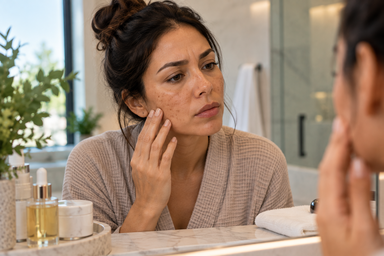
If you've caught yourself angling your phone camera just right to avoid the light hitting those darker patches on your cheeks, or you've stood in the bathroom mirror wondering why your skin looks like a patchwork of different shades, you're not imagining it. Uneven skin tone is one of the most common concerns we hear from clients walking through our doors here in Fort Worth, and for good reason. Between the Texas sun, hormonal changes, and the occasional breakout that leaves a mark long after it's healed, our skin goes through a lot.
The good news is that uneven skin tone isn't something you just have to live with. Once you understand what's actually causing the discoloration, choosing the right treatment becomes a lot more straightforward. Updated this September 2026 with the most current guidance we give clients in-office, here's what we want you to know before your next appointment.
What's Actually Causing Your Uneven Skin Tone?
Not all discoloration is created equal, and that matters more than most people realize. The treatment that clears up one kind of unevenness might do almost nothing for another. Before we talk about fixes, let's talk about causes.
Sun Damage and Fort Worth's Year-Round Sun Exposure
Texas doesn't really do "off seasons" when it comes to sun exposure. Even on a mild January afternoon in Fort Worth, UV rays are working on your skin, and over years that adds up to sun spots, freckling, and a generally blotchy complexion, especially across the cheeks, forehead, and backs of the hands. This type of pigmentation tends to show up gradually, so many of our clients don't notice how uneven their tone has become until they see an old photo and do a double take.
Post-Acne Dark Marks
If you've dealt with breakouts, even mild ones, you've probably noticed the mark that lingers long after the pimple itself is gone. This is called post-inflammatory hyperpigmentation, and it's incredibly common, particularly in skin that tans or darkens easily. The frustrating part is that these marks can take months to fade on their own, and picking or over-exfoliating tends to make them worse rather than better.
Melasma and Hormonal Pigmentation
Melasma shows up as symmetrical, often brownish patches, typically across the cheeks, upper lip, or forehead. It's closely tied to hormones, which is why so many women notice it during pregnancy, while on birth control, or during perimenopause. Unlike sun spots, melasma is notoriously stubborn and tends to flare with heat and sun exposure, which makes it especially tricky to manage here in North Texas.
Can Uneven Skin Tone Be Prevented, Or Only Treated?
This is one of the most honest conversations we have with clients. Some causes of discoloration are at least partially preventable. Daily SPF, staying consistent with a medical-grade skincare routine, and avoiding peak sun hours can meaningfully slow down sun-related pigmentation and help post-acne marks fade faster instead of settling in. But genetics, hormones, and past sun exposure you can't undo mean that prevention only gets you so far. For most people who already have visible unevenness, prevention and maintenance work best paired with an actual treatment that addresses what's already there.
What Treatments Actually Even Out Skin Tone?
This is where having options matters, because the right approach really does depend on what's driving your discoloration.
How a Chemical Peel Targets Discoloration
The Perfect Derma Peel is one of the treatments we reach for most often when clients come in with uneven skin tone. It's a medium-depth chemical peel specifically designed to address discoloration issues, including melasma and age spots, along with acne scars, active breakouts, and rough texture. A session takes about 30 to 45 minutes in the chair, and the visible peeling typically starts around day three, lasting five to seven days as the discolored, damaged surface layer sheds to reveal fresher, more even-toned skin underneath.
When Laser Skin Resurfacing Is the Better Option
For clients dealing with a mix of concerns, like fine lines and wrinkles alongside pigmentation and uneven texture, laser skin resurfacing with the Lutronic Ultra Laser is often the better fit. This treatment targets age spots and discoloration while also improving overall skin texture and brightness, essentially working on multiple fronts at once. Sessions run 30 to 45 minutes, and you can expect mild warmth during the treatment, some redness for up to 24 hours afterward, and light flaking around days four and five. For the best results, we typically recommend a series of three treatments spaced about four weeks apart, since pigmentation tends to respond best to a gradual, layered approach rather than a single session.
How a Customized Facial and Medical-Grade Skincare Help Maintain Results
Whichever treatment path fits your skin, what you do between sessions matters just as much. Our ZO Custom Facial is tailored to your specific skin concerns and pairs well with a peel or laser series to help maintain your results and keep new discoloration from creeping back in. We also build out home routines using medical-grade skincare lines like ZO Skin Health and SkinBetter Science, which are formulated to support brighter, more even-looking skin long after you leave the treatment room.
How Long Does It Take to See an Even Skin Tone?
Patience genuinely pays off here. With the Perfect Derma Peel, most clients notice brighter, more even-toned skin within about a week, once the peeling phase wraps up, though deeper pigmentation may need a follow-up session for full results. Laser skin resurfacing works more gradually by design. Since we recommend a series of three sessions spaced four weeks apart, most clients see steady, cumulative improvement over two to three months rather than an overnight transformation. That gradual pace is intentional. It allows the skin to heal properly between sessions and tends to produce results that look natural rather than overdone, which is always our goal.
Is Treatment Safe for Every Skin Tone?
This is a question we take seriously, especially because certain treatments for pigmentation can actually make discoloration worse on some skin tones if the wrong approach is used. The Perfect Derma Peel is formulated to be safe for all skin types and tones, which is part of why we rely on it so heavily for clients dealing with uneven skin tone across a wide range of complexions. That said, everyone's skin responds a little differently, and factors like how easily your skin tans, your history with pigmentation, and your specific concerns all play a role in determining the right treatment plan. That's exactly what a one-on-one consultation is for. We look at your skin in person and talk through your history before recommending a path forward, rather than assuming a one-size-fits-all approach will work.
Frequently Asked Questions
What causes uneven skin tone in the first place? The most common culprits are sun exposure, post-acne dark marks, and melasma related to hormonal changes. Fort Worth's near constant sun exposure makes sun-related pigmentation especially common here.
Which treatment is better for uneven skin tone, a chemical peel or laser? It depends on your main concern. A chemical peel is often the go-to for discoloration like melasma, age spots, and post-acne marks, while laser skin resurfacing is a great option when you're also dealing with texture and fine lines alongside the pigmentation.
How many treatments will I need to even out my skin tone? For a chemical peel, many clients see noticeable improvement after one session, with a follow-up sometimes recommended for deeper discoloration. For laser skin resurfacing, a series of three sessions spaced about four weeks apart is typically recommended.
Will my uneven skin tone come back after treatment? Ongoing sun exposure and hormonal shifts can bring pigmentation back over time, which is why we recommend daily SPF, a consistent medical-grade skincare routine, and periodic maintenance facials to help protect your results.
Is it safe to treat uneven skin tone if I have a deeper or darker skin tone? The Perfect Derma Peel is designed to be safe across all skin types and tones. Because every case is different, we recommend a consultation so we can evaluate your skin specifically and recommend the safest, most effective option for you.
The Tone Is Set (And This Time, We Mean It Nicely)
Uneven skin tone has a way of making you feel like your skin is telling on you, whether it's years of Texas sun, an old breakout that won't let go, or hormones doing their own thing. The reassuring part is that you don't need a dramatic overhaul to fix it. With the right combination of a chemical peel, laser skin resurfacing, or ongoing skincare support, an even, healthy-looking complexion is well within reach, and it can look completely natural rather than "done." If you're ready to figure out which approach fits your skin, we'd love to see you in person. Visit us at Bougie Aesthetics or reach out today to schedule your consultation in Fort Worth.