



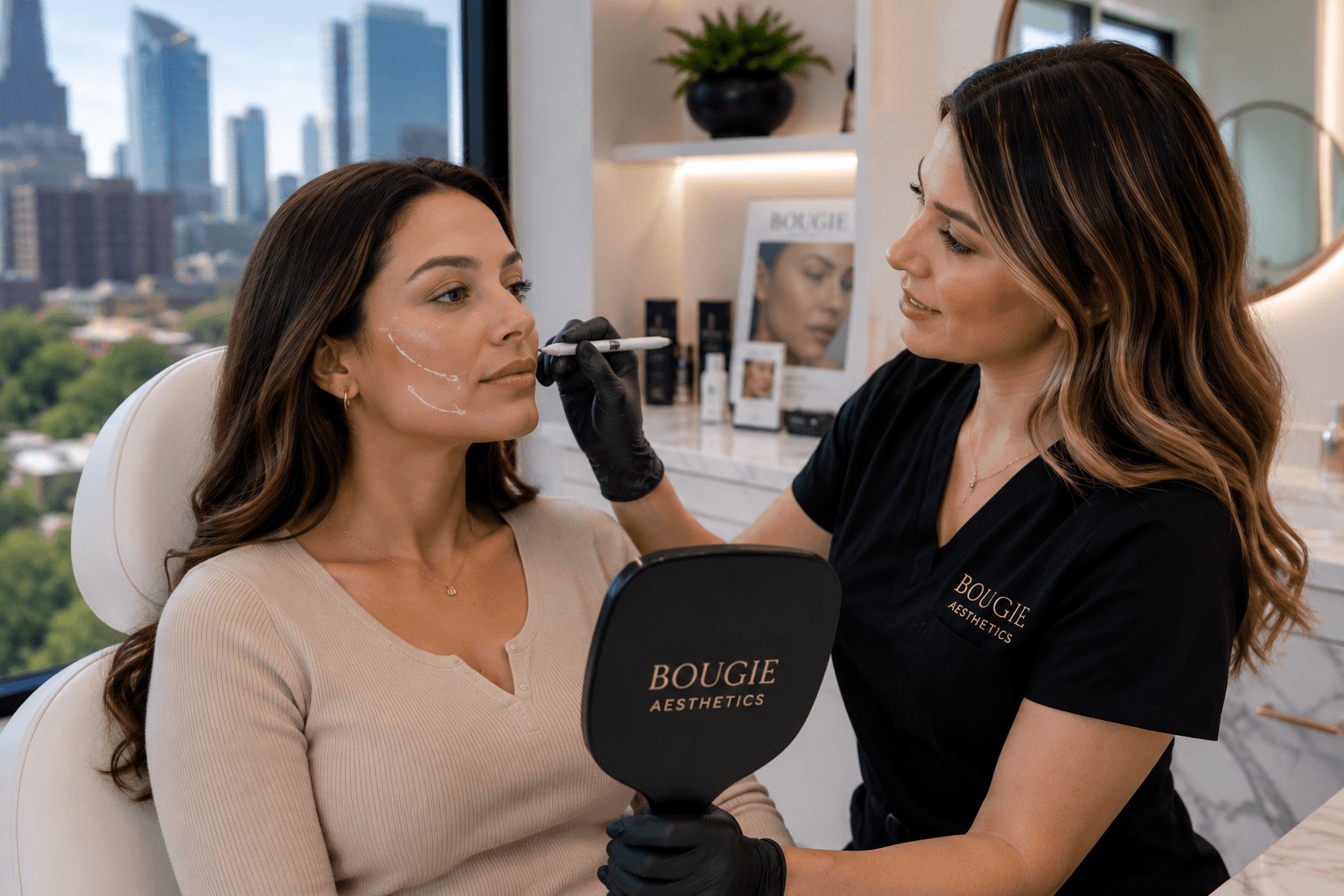
There's a specific kind of frustration that comes with looking tired in photos even after a full night of sleep. Or noticing that your cheeks, which used to sit high and full, now seem to slope downward toward your jaw. This isn't your imagination, and it isn't necessarily about weight or aging in the way people assume. It's volume loss, and it's one of the most common concerns that brings people to research dermal fillers in the first place.
If you're in Fort Worth and trying to figure out whether fillers are actually the right answer for what you're seeing in the mirror, this breaks down what's really happening underneath the surface and what your options look like at a clinic like Bougie Aesthetics. For a broader overview, our post on what dermal fillers are, how they work, and where to get them is a helpful starting point.
Why Does Facial Volume Loss Actually Happen?
Underneath your skin sits a structural framework of fat pads, collagen, and bone that gives your face its natural shape. Starting in your mid to late twenties, collagen production begins a slow decline, fat pads gradually shift and thin, and even facial bone density can decrease slightly over time. The combined effect is a face that loses its earlier contour, with cheeks flattening, temples hollowing, and the area under the eyes appearing more sunken.
Is Volume Loss Just Part of Aging, or Are Other Factors Involved?
Aging plays the biggest role, but it isn't the only factor. Significant weight fluctuations, sun exposure, smoking, and even genetics can accelerate how early and how dramatically someone experiences facial volume loss. This is part of why two people the same age can look noticeably different in terms of facial fullness and structure.
What Are the Common Signs You're Dealing With Volume Loss?
Do Your Cheeks Look Flatter or Lower Than They Used To?
Lifting cheeks is one of the most requested outcomes from filler treatment, and for good reason. When cheek volume declines, the mid face loses its natural lift, which can make the entire lower face appear to sag even if the skin itself hasn't changed much.
Have Nasolabial Folds or Marionette Lines Become More Noticeable?
The lines running from your nose to the corners of your mouth, and from the corners of your mouth down toward your chin, often deepen as surrounding volume decreases and no longer supports the skin above it. Our guide on the nine ways we use dermal fillers on the face covers these areas and more in detail.
Is Your Jawline Losing Its Definition?
A jawline contour that used to look crisp can blur as fat shifts downward and volume decreases along the jaw itself. This is one of the more common reasons people seek out filler placement specifically along the jawline and chin, a concept we cover in more depth in our post on mid face fillers for DFW men and women.
Do You Have Noticeable Hollowing Under Your Eyes?
Under eye hollowing, sometimes called tear troughs, is often more about volume loss in the surrounding cheek area than an under eye specific problem, which is why treatment sometimes focuses on restoring cheek support first.
Has Your Chin Started to Look Recessed or Underprojected?
Chin volume can also decline or simply never have been particularly prominent to begin with. Filler placed strategically in this area can improve facial balance and even influence how proportionate the nose and jawline appear.
How Do Dermal Fillers Actually Address Volume Loss?
Dermal fillers, most commonly made from hyaluronic acid, work by physically restoring lost volume beneath the skin. Once injected, they add structural support, lift surrounding tissue, and in many cases stimulate the body's own collagen production over time. Unlike neurotoxins, which relax muscle movement, fillers add back what's physically missing.
At Bougie Aesthetics, fillers are used across the cheeks, jawline, chin, lips, and under eyes, with treatment plans built around each client's specific pattern of volume loss rather than a generic template.
What's the Difference Between Fillers and Biostimulators Like Sculptra or Radiesse?
Traditional hyaluronic acid fillers provide immediate, visible volume. Biostimulators like Sculptra work more gradually, encouraging your own body to rebuild collagen over several months for a subtler, longer lasting result. Many clients combine both approaches depending on how quickly they want to see change and how long they want results to last.
Can Fillers Help With Fullness Under the Chin Instead of Adding Volume?
This is actually the opposite concern, but it's worth mentioning since it often comes up in the same conversation. For clients dealing with excess fullness under the chin rather than volume loss, Kybella offers a non filler injectable option that gradually breaks down fat cells in that specific area. For clients who have lost volume after significant weight loss, Renuva is another option worth discussing with your provider.
Who Is a Good Candidate for Dermal Fillers?
Most adults noticing volume loss, flattened cheeks, or deepening folds are reasonable candidates. Certain medical conditions, active infections in the treatment area, and specific medications can affect eligibility, which is why an honest consultation always precedes treatment. Providers will also evaluate whether your specific concern is better suited to filler, a biostimulator, or a combination of both.
What Should I Expect During My First Filler Appointment?
Expect a real conversation first, where your provider examines your facial structure and asks about your goals before recommending specific areas or products. Treatment itself typically takes twenty to forty five minutes depending on how many areas are addressed, with numbing cream commonly used to keep the process comfortable. Mild swelling or bruising afterward is normal and typically resolves within a few days to a week.
How Long Do Dermal Filler Results Last?
This varies significantly by product and treatment area. Lip filler often lasts six to twelve months, while cheek and jawline filler can last twelve to eighteen months or longer, since these areas experience less natural movement.
What If I've Had Filler Before and It Didn't Look Right?
This happens more often than people expect, and it's a legitimate concern worth raising during a consultation. Overfilled or asymmetrical results from a previous treatment can often be addressed through dermal filler correction, sometimes with dissolving enzymes to reset the area before starting fresh with a more conservative, natural approach.
Why Fort Worth Clients Are Turning to Fillers Earlier Than Expected
Sun exposure across North Texas accelerates collagen breakdown, which means some clients notice early volume loss in their late twenties or early thirties, earlier than they might in a less sun intensive climate. A lot of local providers now recommend a more preventative approach, using smaller, more frequent filler sessions to maintain volume gradually rather than waiting until loss becomes more dramatic and requires more correction.
Putting the Bounce Back Where It Belongs
Volume loss has a way of sneaking up on people, quietly reshaping a face over years until one day the difference feels sudden even though it wasn't. Dermal fillers won't stop the clock, but they can genuinely restore the structure and lift that time has gradually worn away, often with results so natural that people just assume you've been sleeping better. If your reflection has been bothering you lately, a real conversation about what's actually happening under your skin is a reasonable place to start. You can explore the full filler menu, browse real results in the gallery, or schedule a consultation with Bougie Aesthetics to get a personalized plan.
This guide is updated regularly by our team, most recently in August 2026, to reflect current filler techniques and product options.
Frequently Asked Questions
Do dermal fillers hurt? Most clients describe mild discomfort, similar to a pinch, and numbing cream is commonly used to minimize sensation during treatment.
How soon will I see results after getting dermal fillers? Results are typically visible immediately, though initial swelling can temporarily obscure the final outcome. Most swelling resolves within a few days to a week.
Are dermal fillers reversible? Hyaluronic acid based fillers can be dissolved with an enzyme if needed, which is one reason they remain a popular, lower risk option compared to permanent alternatives.
Can dermal fillers be combined with Botox or Dysport? Yes, many clients combine fillers with neurotoxins to address both volume loss and dynamic wrinkles in the same treatment plan, often achieving a more complete result.
How do I know if I need filler in my cheeks versus my jawline? This depends on where your specific volume loss is occurring. A consultation with an experienced injector is the best way to identify which areas will make the most visible difference for your face.